With global eCommerce sales projected to reach $8.1 billion USD by the year 2026, it is no secret that the digital marketplace is hot, competitive, and has the potential to be exceptionally profitable. That being said, when your eCommerce business is up against a vast number of local, national, and international competitors, each and every aspect of the customer experience counts. From the design of your virtual store to the quality of your products and customer service, building consumer loyalty in the eCommerce industry requires an intimate awareness of your target audience as well as dedication and impeccable attention to all the relevant details.
One of the most significant? Packaging.
Like all packaging, eCommerce packaging serves a dual function: It protects your products during shipping/delivery and also provides an opportunity to showcase your brand and products in the most compelling light. The truth is that eCommerce packaging is not really a detail at all; it is one of the most critical elements of ensuring a standout customer experience that is memorable and exceeds expectations.
That being said, there is a lot to consider as you begin to navigate the world of eCommerce packaging—especially if you are just starting out. Innovative and effective eCommerce packaging does not have to be overwhelmingly complex or expensive, but it does need to meet specific criteria and take certain considerations into account.
If you are just beginning your eCommerce packaging journey and seeking a resource that will allow you to begin building an inventory of appropriate packaging materials for your particular retail niche, this post is for you. Below, we have taken a dive into the fundamentals of eCommerce packaging and provided an overview of the four main eCommerce packaging classifications, a variety of different eCommerce packaging materials, and some important factors to consider when designing and ordering eCommerce packaging.
If you still have questions after reading the information provided here, contact our knowledgeable and friendly SupremeX team directly to learn more and begin creating the perfect packaging for your eCommerce products today!
Key Takeaways
- eCommerce packaging both protects your products and is a reflection of your brand. It sends an important message to consumers!
- The four main classifications of eCommerce packaging materials are: Primary packaging, secondary packaging, tertiary packaging, and ancillary packaging.
- Some of the most popular eCommerce packaging materials include folding cartons, bubble wrap, paper packaging, cardboard boxes, labels, trays, paper foil, and more. Each material has its pros and cons and is ideal under specific circumstances.
- Considerations such as availability, affordability, sustainability, and the dimensions and weight of your products will inform your final decisions about eCommerce packaging materials.
Packaging Materials: What They Are and Why They Are Important
eCommerce packaging materials are just what they sound like: The various materials used to wrap, pack, and protect eCommerce products during shipping, transport, and delivery.
The basics are straightforward, but there is more to consider if you want your eCommerce packaging to create a truly lasting impression.
In addition to protecting your products and ensuring that they arrive safely and in pristine condition, eCommerce packaging is also a critical reflection of your brand. In the digital marketplace, there is no opportunity to immerse your customers in a curated brick-and-mortar atmosphere or connect with them in person, so eCommerce packaging is your opportunity to spotlight your product, brand values, and commitment to an elevated customer experience—all in one shot.
Here are some of the ways that effective eCommerce packaging may delight consumers and build customer loyalty:
- Protecting products and ensuring that they arrive intact
- Providing a convenient and safe unboxing experience
- Tying together an overall attractive and cohesive package
- Communicating your brand values and brand identity
- Making a lasting first impression
- Offering a uniquely personalized experience
- Demonstrating a commitment to sustainable practices
- Offering versatile packaging elements that can be reused time and time again
Does it sound intimidating to take all of these elements into consideration in your eCommerce packaging design? It does not have to be. With some creativity, intentional planning, and attention to detail, you can have consumers in the palm of your hand from the first moment they hold your product in the palm of theirs. Our experienced team at SupremeX can help.
It all begins with a little knowledge. Let us start by taking a closer look at the various classifications of eCommerce packaging materials:
Packaging Material Classifications
In the world of packaging, there are four main material classifications, each with its own purposes and considerations.
Primary Packaging
Primary packaging, also sometimes referred to as consumer packaging or retail packaging, is the packaging that contains and protects an individual product. It is manufactured with the consumer or end user in mind and is typically carefully designed and branded. In many cases (particularly in the beverage and food packaging industry), primary packaging protects products against contamination.
When you walk through the aisles of most retail stores, the vast majority of what you see is classified as primary packaging. Examples of primary packaging include:
- Glass bottles
- Bags or sacks
- Cans
- Laminated tubes
- Folding cartons
- Paper packaging
- Shrink wrap
- Plastic containers
Secondary Packaging
Secondary packaging holds individual, primary packaged units together for mass transport and delivery and is often seen in warehouse settings, such as at Costco. It protects primary packaging, optimizes the efficiency of transporting multiple items, and helps to ensure that products reach end users intact.
Secondary packaging may include multiple components such as padding, separators, reinforcements, and more. Common examples include:
- Plastic or wooden crates
- Plastic or wooden pallets
- Cardboard/corrugated boxes
Tertiary Packaging
Just as secondary packaging combines multiple primary packaged units, tertiary packaging combines multiple units of secondary packaging. Also referred to as bulk or transit packaging, it makes the transportation of large, heavy loads safer and more secure.
Common examples of tertiary packaging include:
- Wooden or plastic pallets
- Wooden or plastic shipping containers
- Corrugated fiberboard sheets (to provide added protection)
Ancillary Packaging
Ancillary packaging refers to the materials used in combination with other packaging (most often primary packaging materials) that further enhance their appearance, function, and/or protective qualities. It can play a large or small role in overall packaging design and may include:
- Specialty printing inks, coatings, finishes, or embellishments
- Labels
- Adhesives, tapes, or straps
- Cushioning (foam, shredded material, bubble wrap)
- Lids, caps, or threaded closures
- Clips
Common Types of Packaging Materials
Have an eCommerce packaging vision in mind that is ready to be brought to life? Selecting the right components is critical. Here are some of the materials you may choose to include in your final design:
Folding Cartons
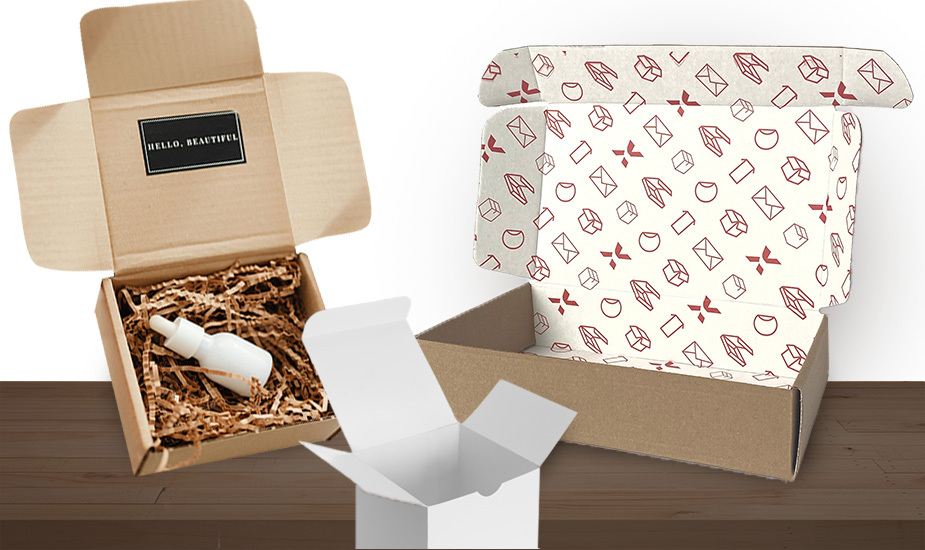
Folding paperboard cartons are a versatile and popular packaging solution. Sturdy, affordable, customizable, and recyclable, they can be used to package anything from foods and beverages to pharmaceuticals, cosmetics, toys, and much more. Rigid boxes, which are manufactured using a stronger, more durable paperboard, are often a go-to choice for electronics and luxury items.
At SupremeX, folding cartons are one of our areas of expertise. We use a wide range of high-quality paperboards to create one-of-a-kind packaging solutions for our clients. Depending on the application specifications, our folding cartons range from 100% virgin to 100% recycled materials.
Our paperboard options are in the 8pt-38pt caliper range and include:
- Solid Bleached Sulphate (SBS)
- Thermal Mechanical Pulp (TMP)
- Folding Box Board (FBB)
- Coated Recycled Board (CRB)
- Uncoated Recycled Board (URB—chipboard)
- Solid Uncoated Sulfate (SUS—virgin coated board)
Pros:
- Gorgeous, versatile, high-quality, structurally strong, customizable, affordable
Cons:
- Cost can increase substantially with added coatings, finishes, and embellishments
Paper
Paper materials form the foundation for a vast range of different types of packaging solutions. From paper bags to tissue papers, custom cards, and much more, the potential to use paper in innovative, interesting, and functional ways is almost limitless.
At SupremeX, our cover stocks from the UFS paper market can be used in eCommerce packaging as long as they are at least 8pt in caliper. They can be utilized uncoated or coated for standard or specialty applications.
Pros
- Eco-friendly, versatile, functional, flexible, and easy to customize
Cons
- Can be delicate
- Does not resist moisture without the application of a special coating
Cardboard and Corrugated Fiber
Cardboard broadly refers to any heavier paperboard, while corrugated fiber refers to multilayered cardboard that has corrugated material sandwiched between an inner and outer layer. Both are go-to packaging materials for a wide variety of products as well as for secondary packaging used in shipping and transportation.
Cardboard and corrugated boxes provide structure and added durability in packaging. At SupremeX, we incorporate many types of corrugated cardboard into our eCommerce packaging designs. These include (from thinnest to thickest):
- N Flute – Folding carton and eCommerce applications
- F Flute – eCommerce applications only
- E Flute – eCommerce applications only
- B flute – eCommerce applications only (subject to approval)
Pros
- Rigid, insulative, strong, recyclable
Cons
- Like paper packaging materials, cardboard and corrugated boxes must be specially coated in order to resist moisture.
Bubble Wrap
Bubble wrap has long been a popular wrap and void filler for protecting fragile items. It offers exceptional protection when used properly, and who can resist popping all those tempting bubbles?
In recent years, bubble wrap’s popularity has declined as more sustainable packaging materials have emerged into the spotlight. That being said, this plastic packaging option is still a relevant material to consider when designing eCommerce packaging.
Pros
- Effectively protects even the most fragile items
- Can help reduce the amount of packaging space required for shipments
Cons
- Not environmentally friendly
- Can be bulky to store (large rolls)
Shrink Wrap
Shrink wrap is a common eCommerce packaging material used for applications ranging from frozen foods to board games to small consumer goods and much more. Offering a uniform seal and protection, it is most frequently used in combination with other primary packaging elements.
Pros
- Versatile, protective, uniform appearance
Cons
- Not environmentally friendly (though greener options are emerging)
Paper Foil
Paper foil and metalized poly (paperboard with a very thin layer of poly-coated foil) are high-performance packaging materials that combine the barrier properties of metal foil with the flexibility and versatility of paper or paperboard. Often used in the food industry, these materials are moisture-proof and corrosion-resistant.
At SupremeX, we manufacture many variations of metalized poly packaging, depending on the specifications of the project at hand. This material can receive a grade additive that ensures good results in refrigerator or freezer environments and is available as an FSC-certified product with varying degrees of recycled content.
Pros
- High-performance, attractive, moisture and corrosion-resistant
Cons
- May not be recyclable
Trays
Trays are a packaging solution that can be adapted for many different types of products. Available in a range of materials, including paper/paperboard and plastic, they may be used as one component of a larger packaging design or on their own. Tray and sleeve boxes can be elevated for luxury items or used for something as standard as matches, while self-locking tray packaging options are often ideal for protecting fragile products.
Pros
- Versatile, customizable, elegant, functional, sturdy/protective
Cons
- Only suitable for certain sizes and shapes of products
Labels
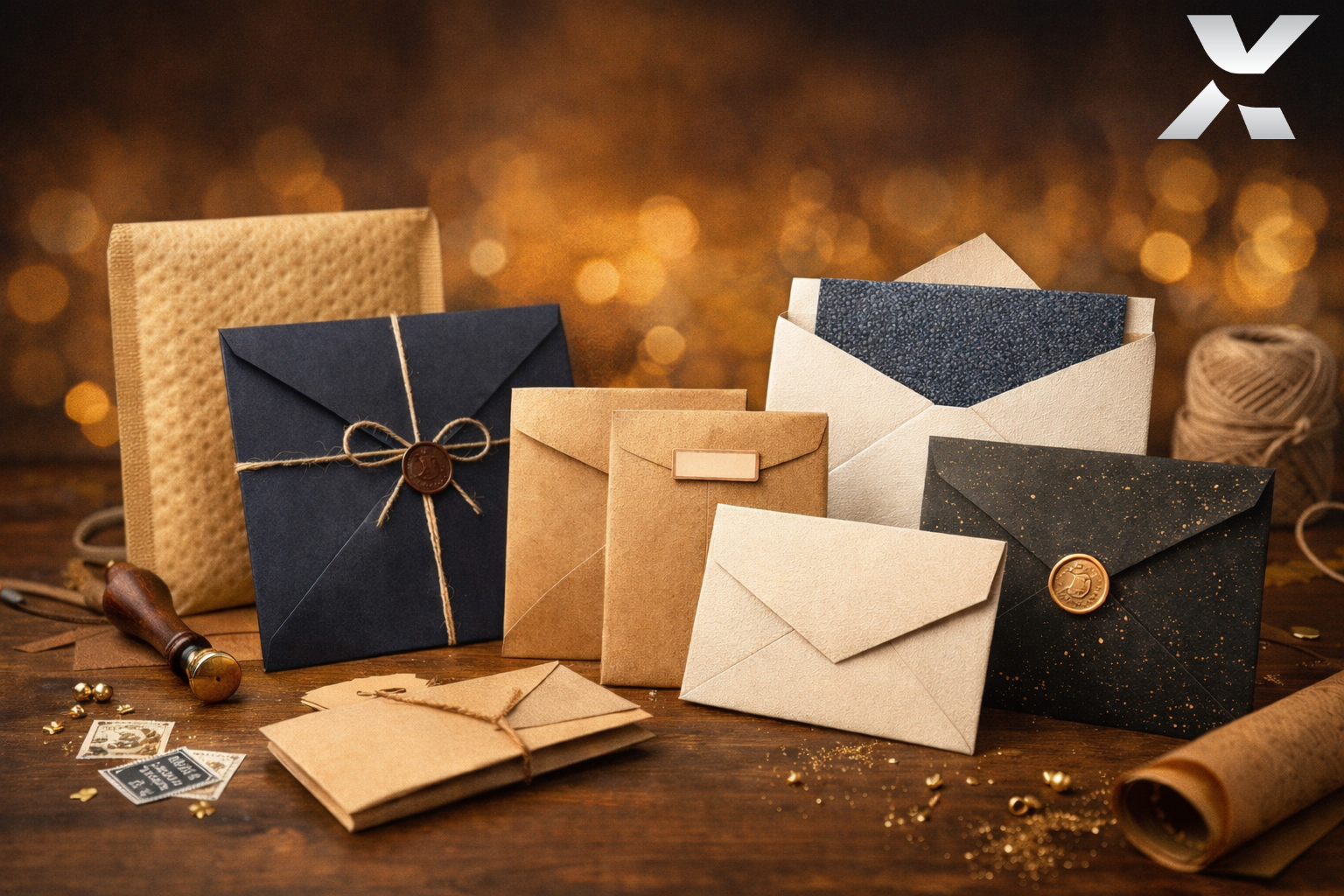
Labels are a critical aspect of primary packaging for many eCommerce products. At SupremeX, we manufacture custom labels, tags, and pouches using a variety of substrates and adhesives, including: Prime labels, shipping labels, pharmaceutical labels, tamper evident labels, pressure-sensitive labels, expanded content labels, membership cards, repositionable notes, and more.
Printing Ink
When it comes to cutting-edge printing techniques, we are industry leaders across North America. At SupremeX, we invest in all the latest technology and equipment to bring your eCommerce packaging vision to life with unparalleled quality, aesthetics, and professionalism. From specialty finishes and coatings to embellishments like embossing/debossing, foil stamping, windowing, and more, we know what it takes to truly distinguish your eCommerce packaging from the crowd.
Other Factors To Consider
As you explore the world of eCommerce packaging, you will start to discover the benefits and drawbacks of different materials for a wide range of different applications and purposes. Aesthetics and durability (protective qualities) aside, here are a few more factors that will also ultimately influence your final packaging design:
- Security – What materials offer additional protective qualities for valuable or potentially high-theft items?
- Availability – How quickly and efficiently can materials be procured?
- Affordability – Which materials are within your current packaging budget?
- Quality – Which materials will maintain their quality over time—even if reused by consumers many times over?
- Sustainability – Which materials are made of recycled components and/or can be readily recycled?
Just like your brand and products, the right eCommerce packaging solution for your particular purposes will ultimately be unique. All of your careful planning will result in a package that stands up to the rigors of transportation and delivery in all the right ways and provides delightful unboxing experiences for your consumer base time and time again.
Getting Started With Packaging Solutions From SupremeX
You do not have to navigate the world of eCommerce packaging solutions alone. At SupremeX, our knowledgeable, friendly, and dedicated team is here to support you. With years of industry experience under our belts, we are prepared and qualified to be by your side every step of the way.
What are you waiting for? Reach out to us to begin your eCommerce packaging journey today!