Since envelopes were not used until the middle of the 19th century, how did one send letters? As with the air we breathe, we all take envelopes for granted. No one really worries on where or how
envelopes are manufactured.
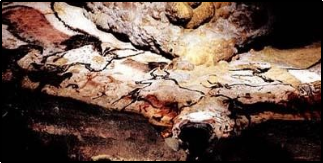
Mankind has always sought to improve ways of communicating and recording thoughts. Cavemen would often move from place to place, in search of food sources. If successful they would draw pictures on cave walls of the animals they had hunted, as a message for others to see. Although it was very difficult, other types of essages or records were engraved on stone tablets, as man evolved, the results were remarkably long lasting.
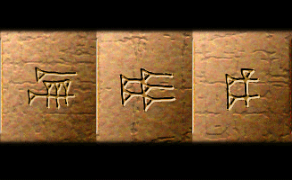
The first recorded “envelope" goes as far back as 2000 B.C. The Babylonians started using “Cuneiform” tablets. The tablets were made out of fresh wet clay, using a reed stylus they would scribe their symbols into the clay. The tablets were then hardened either by the sun or through baking them in ovens. After the tablets were harden they often were encased in an additional layer of clay, this casing was also inscribed with text and seals on the exterior of the package, this precaution would prevent anyone from tampering with the message by rewetting the clay and changing the tablet's contents. Then the outer “envelope" was baked to harden. The Cuneiform could range in size from 1” x 1”, to a point you would have to use two hands to hold one.
Though less durable than stone, it was easier and quicker: sturdy enough for most records and long distances messages. It had to be cracked open to reveal the inner “letter
Cuneiform Tablet & “Envelope”
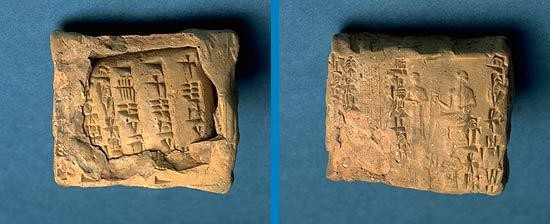
Shown here is a fragment of an original “envelope" 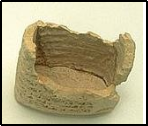
SUPREMEX – INNOVA – PNG
REGISTERED ON CUNEIFORM
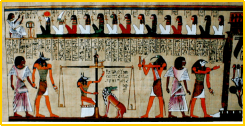
At the time Cuneiform tablets were being used, Ancient Egyptians were inventing the first substance like paper, as we know it. Papyrus was a woven mat of reeds, pounded together into a hard, thin sheet. The word “paper" actually comes from the word “papyrus". Later on in history, the Ancient Greeks used a kind of parchment made from animal skins for the same reason.
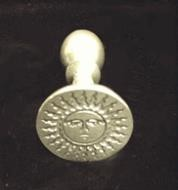
The Persians, as early as 539 B.C., had established an extensive postal system that covered their huge empire. In a system similar to the pony express of the early days of America, horse riders rode in relays to deliver messages, of official parchment or papyrus scrolls. Though created by the Chinese in the year 105, paper didn't reach Europe until the 12th century. As time went on and paper began to be used, the writer of a message had to fold the letter so it formed its own envelope. Then it was sealed by melting the end of a stick of wax over a candle and letting the hot wax drip onto the “flap" and the back of the letter.


The first extensive use of mailing envelopes can be traced back to an English educator and administrator named Rowland Hill, who advocated that the British adopt an inexpensive, prepaid postage rate based on a letters weight, rather than the distance it had to travel. In 1840, the British issued the first postage stamps, which were affixed to an envelope to prove the sender had paid the postage.
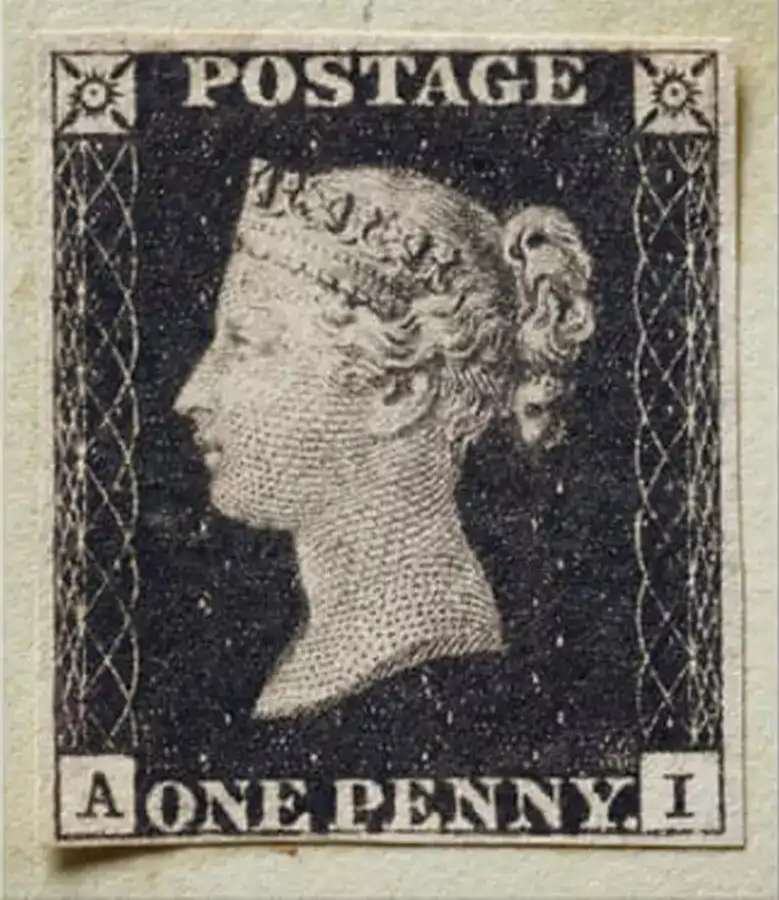
The “Penny Black," issued in England in 1840, is considered the world's first stamp.
John Dickson, of England, made a paper with a continuous thread of silk or cotton that the British Post Office adopted for envelope use in 1840. The stronger-made envelopes were hard to tamper with. They were called “Mulready envelopes" after the English artist William Mulready. This envelope represented a leap forward for Worldwide Communications.
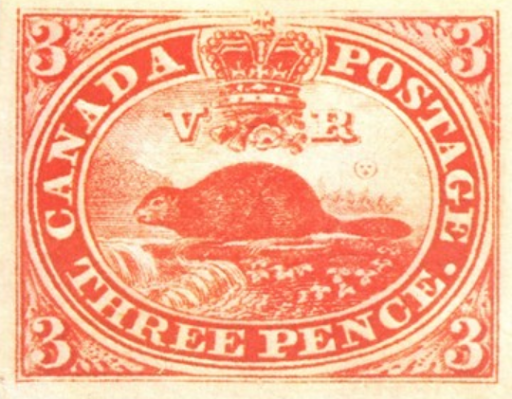 In 1851, the British Crown transferred authority to the province of Canada for the management of its own postal system, whereupon Canada hastened to issue their first postage stamp. Sir Sandford Fleming designed the first ever postage stamp for Canada issued on April 23, 1851
With the use of a chisel, early envelope blanks were cut out of stacks of paper, then folded and pasted by hand. A single person making envelopes by hand was limited to two or three thousand a day. In 1851 Warren de la Rue, patented a machine for making envelopes, but the sealing and cutting were still done by hand.
Machines can now produce up to 1250 envelopes per minute. Today, what seems like a simple container for a letter is actually a complex variation of paper, sizes, and styles.
Paper
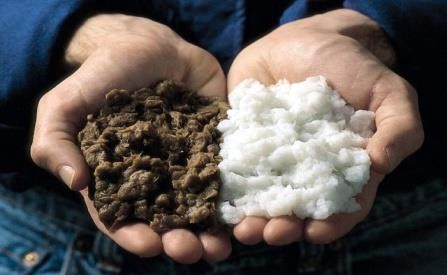
Without paper, obviously the manufacturing of envelopes would not be what it is today. We will not go into the development of making paper, but wood was not used in a large capacity in the manufacturing of paper, until the late Eighteen Hundreds.
For hundreds of years, cotton and linen rags were the papermaker's raw materials. In 1666 in England, cotton and linen were prohibited from being used for burial shrouds, in order for the linen to be used in papermaking.
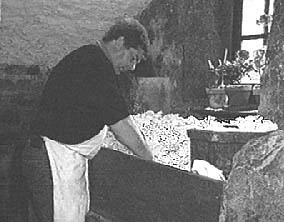
In this old historic paper museum they are manufacturing paper, the way it was done over 300 hundred years ago. It takes about thirty hours to prepare rag pulp. Old hemp and linen white rags are being used.
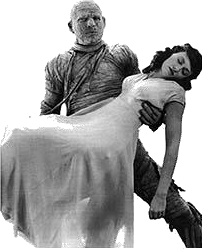 In fact during the Civil War, rags and cotton became very scarce. To get additional supplies of cloth to manufacture paper, Augustus Stanwick imported mummies from Egypt to the United States. The mills then made paper, out of their wrappings.
(we do not know what happened to the rest of their remains)
The Converting of Paper
To transform paper into envelopes is done by using two different techniques. There is the conventional method, of sheeting the paper from large jumbo rolls, next die cutting out blanks, followed by folding the blank into a envelope on a high speed folding machine.
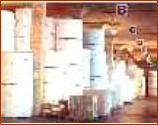
Rolls of paper from the mill
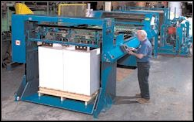
Rolls are then sheeted onto skids
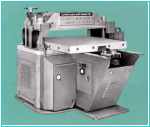
Paper then taken to die press
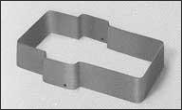
Die for Double Side Seam
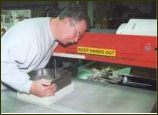
Die cutting out the blanks
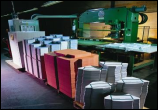
Skids of die cut blanks
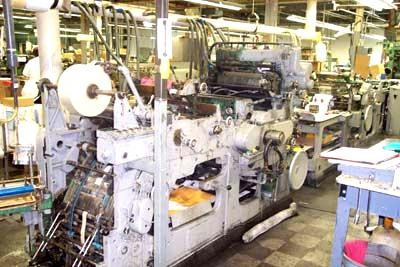
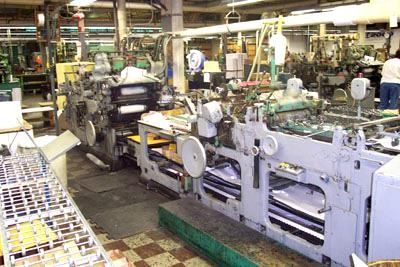
WD machinery for converting blanks into envelopes.
WD conventional machine will also cut out windows, and do flexo graphic printing.
Two colours on the outside of the envelope and one colour inside.
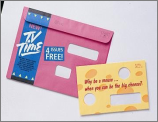
Finished Product (Outside Litho)
The Converting of Paper
Another method of transforming paper into envelopes is using web equipment.
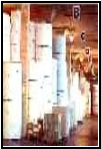
After the rolls are received from the mill, the rolls are taken out and placed onto the end of the web machines. All web machines can die cut out the blank, cut out the windows, print, perf, and convert the paper into envelopes, in a single operation.
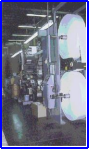
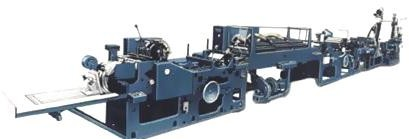
249 Web Machines
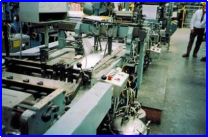
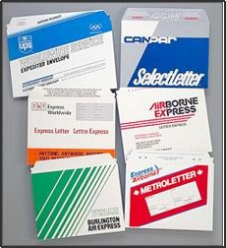
Courier Products from the 249 family of machines
Types of Envelopes
Today’s machinery can manufacture envelopes in an almost endless number of sizes, shapes, and styles in order to meet the specific requirements of our customers. Envelopes are also made from many different styles, colours, finishes and weights of paper. Imagination and creativity in mixing these elements into original designs are extremely important to the envelope industry.
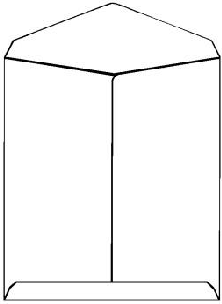
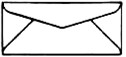
Although there are many envelope styles in use, there are only two basic construction types: open side or open end. These two basic designs can lead
to dozens of different envelopes.
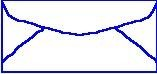
Open Side (O.S.) Envelope that has the opening, (flap) on the longest dimension.
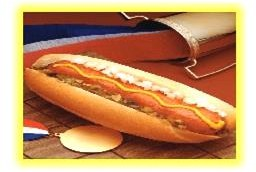 You could call a hot dog an open side hot dog -The opening is at the longest dimension-Then you insert all the important bits and pieces.
Open End (O.E.)
Envelopes that have the opening, (flap) on the shortest dimension.
Envelope Seams
Cross Back (C.B.) Diagonal Seam
Outside Side Seams (O.S.S.)
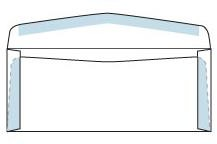
Double Side Seam (D.S.S.)
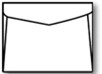
Side Seam (S.S.E.)/ Inside Side Seam
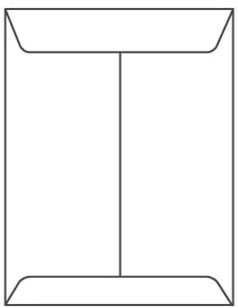
Centre Seam (C.S.)
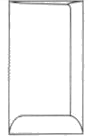
Single Side Seam

Gusset

Baronial
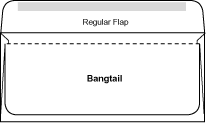
Bangtail
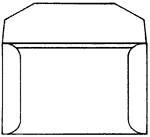
Envelope Flaps

Regular

V-Flap

Wallet

Square
Rofalex Dies vs. Hard Dies
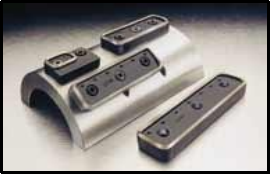
Rofalex, or flexible die technology, has been used for years. It was first adapted to the envelope industry in Canada in the early 1980s. By employing this new type of window cutting system, envelope manufacturers enjoy efficiencies in their factories while Sales and marketing gain the ability to venture away from the norm in terms of creativity.
Rofalex technology consists of a plate approximately 19/1000” in thickness. The window shape is exposed and etched in much the same way that a photopolymer plate is made. The die is mounted on a cylinder, which cuts against an anvil as the paper is passed through the machine. A vacuum is then used to remove the chip from the hole.
The main advantage of flexible die technology is the cost savings obtained in decreased set-ups hours on the factory floor. Conventional window dies (hard dies) take up to a week to produce costing in excess of several hundred US dollars, whereas Rofalex dies are available in two days and are 2 to 3 times less expensive.
From Sales and Marketing point of view, the advantages are endless for our customers. We can design and shape almost anything in Rofalex.
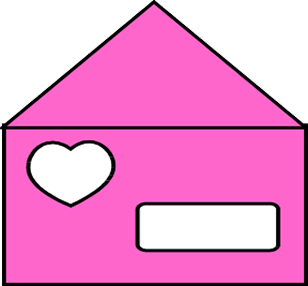
Rofalex Die

Hard Die
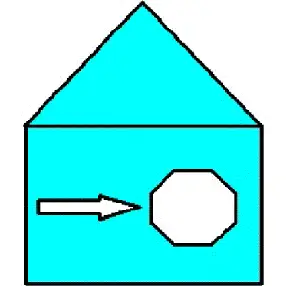
Rofalex Die
Flexible mechanical clamping system and magnetic mounting system, is installed into the window section of the machine. Then when doing window changes, only the Rofalex die needs to setup.
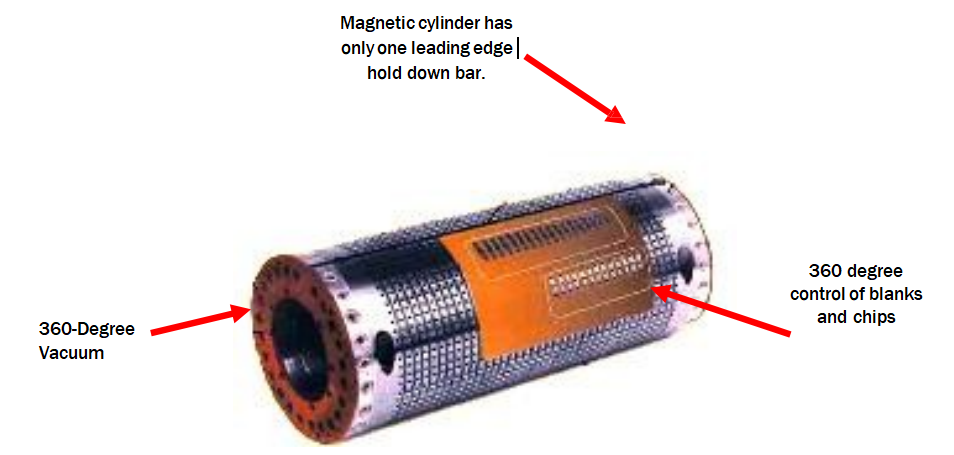
 Hard Dies
Using hard window dies in the past, meant mounting the die on a holder then setting up the holder
in the window section of the machine.
Window Film
Glassine window film is inherently hazy and is prone to buckling under humid conditions. It has long been recognized that glassine windows pose significant impediment to the automation of envelope stuffing and distribution.
Envelopes with glassine windows experience a much higher rejection rate from automated equipment then envelopes with plastic windows (AVP). Rejection is caused by glassine’s inherent haziness and it’s moisture sensitivity which causes buckling or distortion in humid or moist conditions.
This buckling of the film, and the resulting distortion of the envelope, can cause machines to jam, creating headaches for companies attempting to automatically stuff large quantities of envelopes.
Plastic window film (polystyrene) replaced glassine many years ago as the material of choice for envelope windows because of its optical clarity and stability.
Envelopes with plastic windows (polystyrene) lend themselves readily to automated stuffing, sorting and distribution while still providing for confidentiality and envelope quality and stability.
The ability to clearly and consistently read the name and address from envelopes is critical to the success of the Postal Service’s modernization program.
Polystyrene has been the clear choice because it meets and exceeds the demands of customers,
U.S. and Canadian postal services, and the public.
Consequently, polystyrene film comprises 90% of more or the window film produced today.
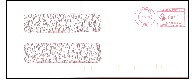
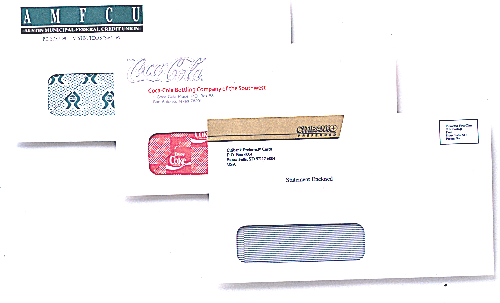
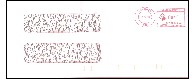
Avpexine window film (polystyrene) is a clear window film material. Reading something behind it is like looking through your car windows in the winter.
Clearview window film is a very clear window film. Reading something behind it, is like looking through your car windows after you get them washed.
Glassine window film is inherently hazy. Trying to read anything behind glassine is like reading something behind wax paper.
An outlook has no window film behind the window opening, and does not follow postal regulations with today’s automated postal systems.
The Outlook Envelope Company first invented the outlook/window in 1902, which to this day is still in business.
Measuring Window – Size & Position
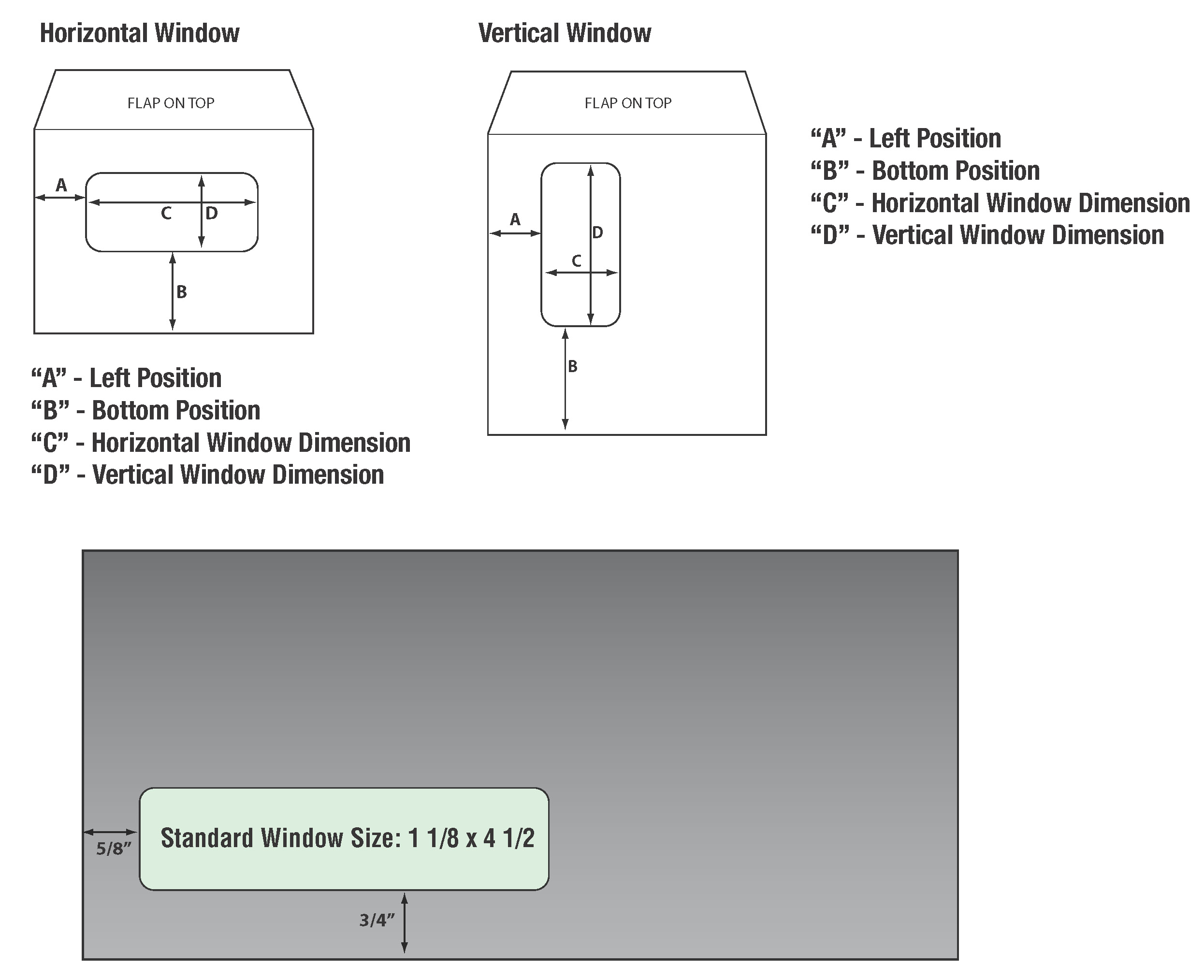
Horizontal versus Vertical
When measuring a window whether for size or window position, always be sure the flap is at the top of the envelope.
For window size measure the vertical dimension first (north/south) then the horizontal dimension (east/west). If the vertical size (north/south) is the largest dimension, then it is called a vertical window.
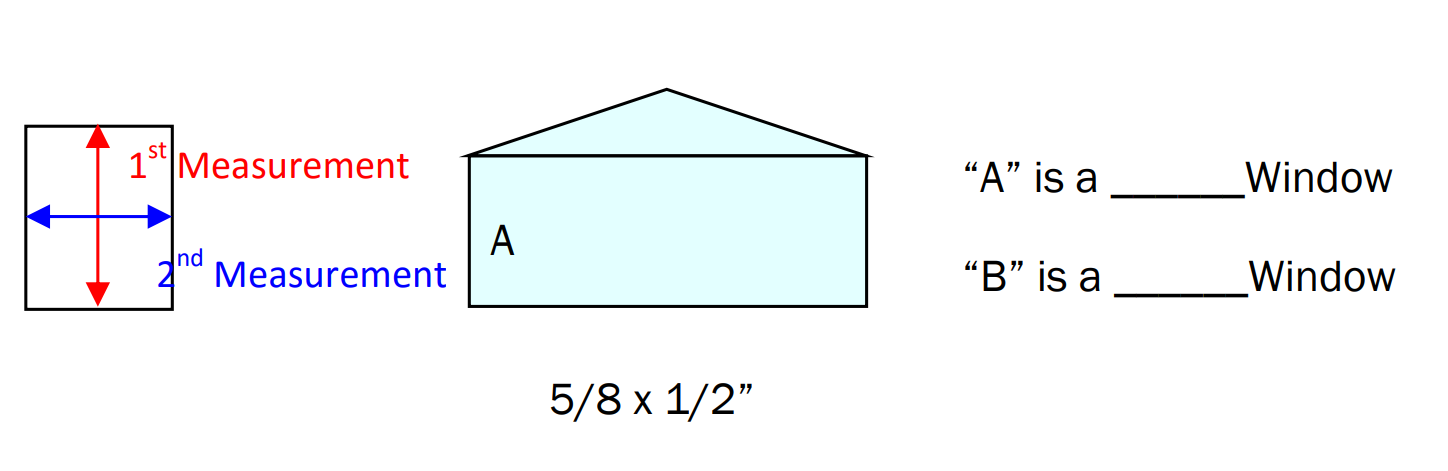
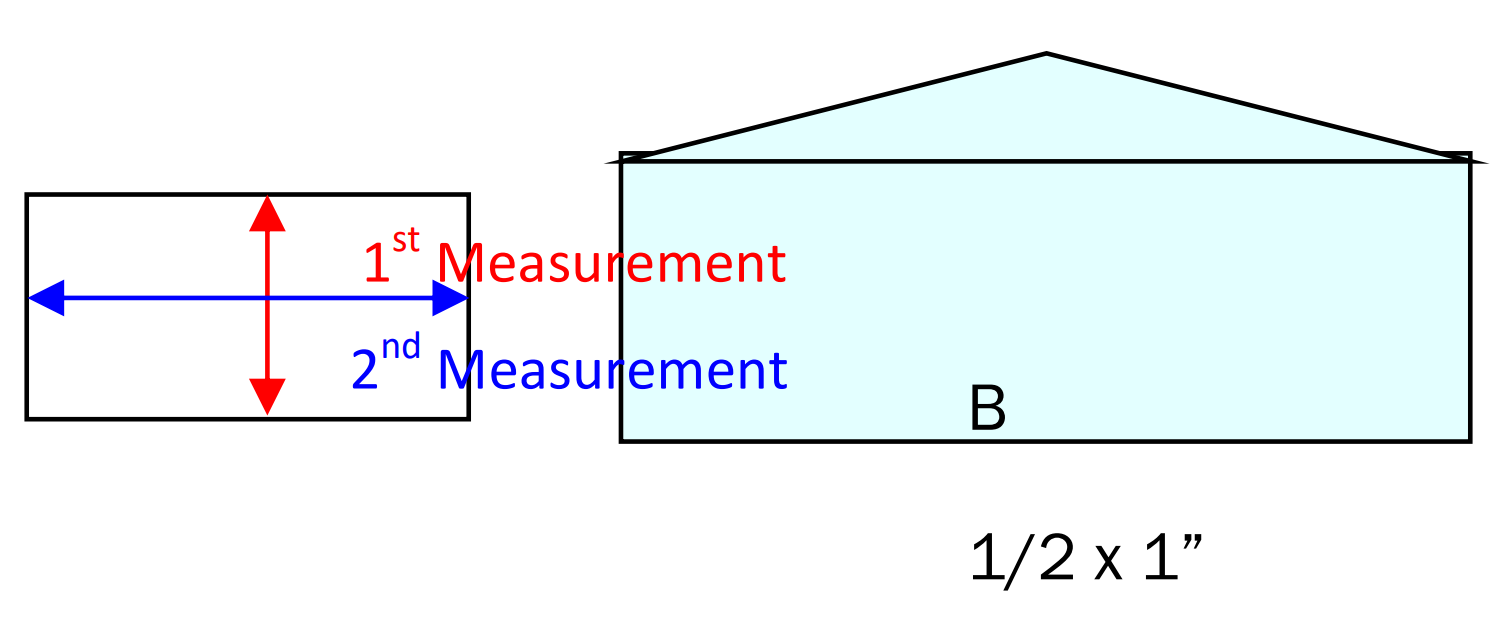
Measuring Window Position
The first measurement for window position is measured from the left edge of the envelope, to the beginning edge of the window
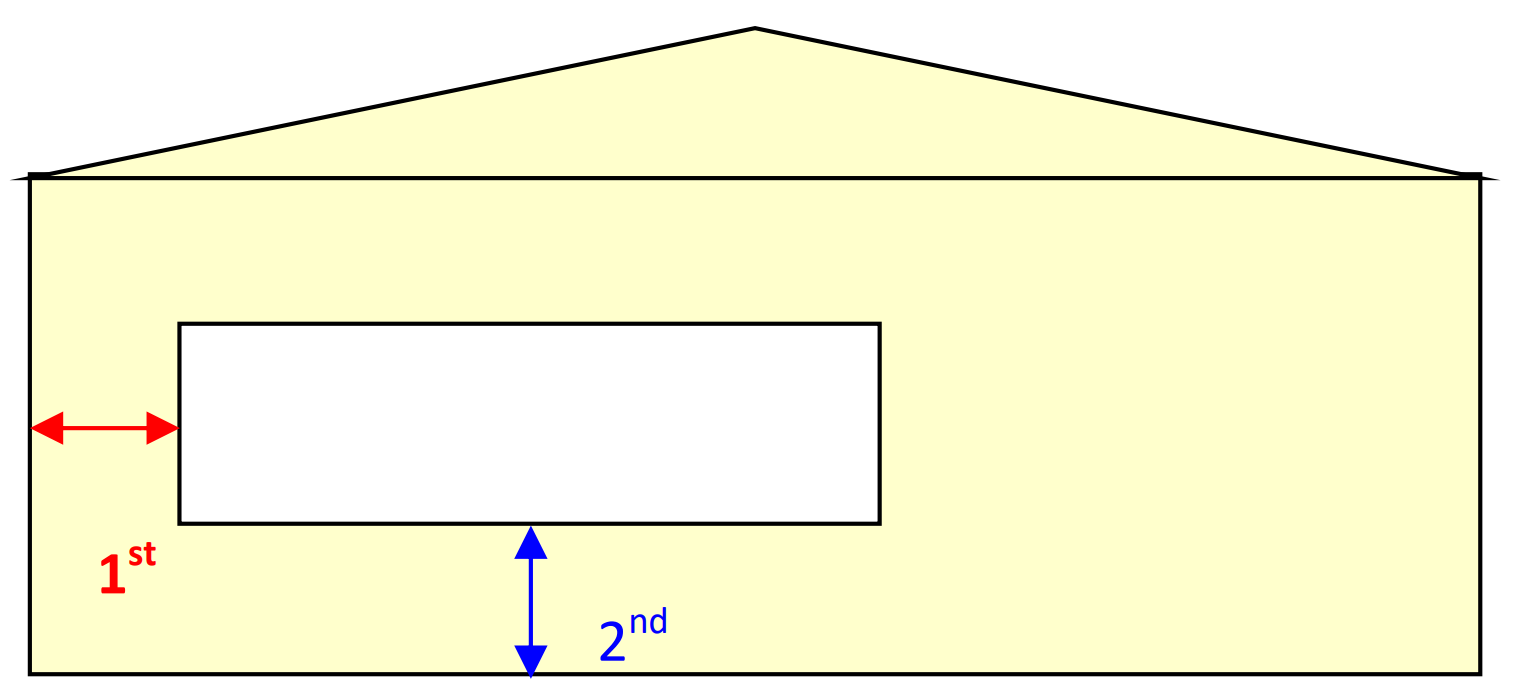
The second measurement for window position is measured from the bottom edge of the envelope, to the beginning edge of the window.
Printing
Lithography – (Litho – Offset – Outside Litho – Halm Jet Printing)
Lithography printing is done before (flat sheets) or after the manufacturing of envelopes.
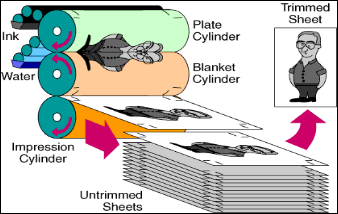
The basic principle on which it works is that oil and water do not mix. A litho printing plate has nonimage areas, which absorb water. During printing, the plate is kept wet so that the ink, which is inherently greasy, is rejected by the wet areas and adheres to the image areas.
Artwork is produced digitally with graphic design software. An image setter is then used to produce films (negative). When printing with more than one colour there is a separated film for each ink colour used. (See Four Colour Process Printing). Each film is used to make a printing plate by a
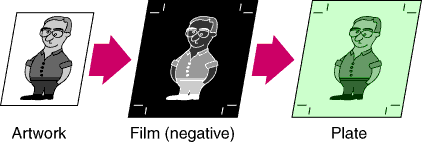
The plate surface has non-image areas, which absorb moisture and repel ink, the plates, which can be made of a variety of materials, are attached to the plate cylinder. The plate is kept moist throughout so that ink only adheres to image areas.
During every cycle of the press the ink image is first transferred to a rubber surfaced blanket or blanket cylinder and from there to the paper. This indirect method is the 'offset' after which the process is named.
- Lay sheet is prepared and approved
- Sheets of paper are printed
- Sheets are trimmed
- Sheets are die cut into envelope blanks
- Subsequently blanks are converted to envelopes
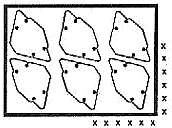
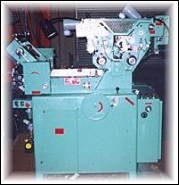
Halm Jet Printing (Litho – Offset -TFS)
After envelopes have been manufactured, they can been printed offset, up to two colours on the front and back of the envelope. (some restrictions apply)
Guidelines for Litho Envelope Conversion
The purpose of this guideline is to inform you of standard specifications and tolerances for the conversion of Litho printed envelopes. If you have any questions, please consult your Account Manager.
Before creating a new envelope design, it is strongly recommended that a blank of the envelope or a 1 up die line be secured from your representative. Our most popular layouts are available as an electronic template.
Note: It is suggested that you do not use a previously printed envelope or an envelope from a competitor at the creative stage. Slight variations are difficult to detect until the actual conversion and it can be a very costly venture to repair or replace the product at the converting stage.
Envelope Graphics & Design
- Matchinggraphics from one envelope panel to another is nearly impossible
- Matchinggraphics from the flap to the back panels is nearly impossible
- Must plana minimum of ¼” bleed around each panel
- Copyshould be kept away from the window area by at least ¼” unless intended
- Plusor minus 1/8” of a inch tolerance must be allowed for in the following areas:
- Diecutting
- Folding
- Windows
Where design does not conform to above, please remember that variations are likely to be visually obvious.
Window Specifications – “FRONT”
- Windowmay be positioned within 3/8” of the perimeter of the envelope
- Showcasewindows must allow a 7/8” perimeter
- Multiplewindow envelopes require a minimum of ¼” between windows to allow for gumming (same for back)
- Wraparound windows to be discussed for position
- No closer than 1-3/8” minimum from the end of the back panel of the envelope blank
- Position left and right is determined by size of side seam
- No lower than 3/8” from bottom score
- All showcase windows require 80lb. basis weight paper on sizes 6 x 9” and under and 100lb. basis weight for envelopes larger than 6 x 9”
- Wrap around windows must be discussed for position
RUN WASTE – NORMAL MAILING ENVELOPES COMPLEX ENVELOPES
| Each Version | Examples | |
| For each version less than 10M – – | 2,000 over required | (Perfs, large or Multiple Windows) |
| Less than 20M | 15% waste | To be discussed upon application. |
| Over 20M | 10% waste | |
| Over 500M | 8% waste |
Client/Printer Responsibility
- A dyeline has been secured from SupremeX
- Film complies with all specifications noted above
- When there is full coverage graphics on coated stock, check with SupremeX as to whether or not a spot/full varnish will be required
- Arrange for a full Dylux proof of the printed sheet to be made, that follows the layout provided
- Forward the full Dylux proof of the full printed sheet to SupremeX or ask the representative to come in and see the proof
- Arrange for any requested changes to be done and a new Dylux proof provided
- SupremeX will sign off on the final proof for convert-ability
- Upon completion of printing, arrange for the dyeline to be returned with printed stock
 ENVELOPE JOBS SHOULD NOT GO TO PRESS WITHOUT FIRST SECURING
SupremeX’s SIGNATURE OF APPROVAL ON A FINAL DYLUX PROOF OF THE FULL SHEET, VOID OF ANY CHANGES.
- In order to maintain registration through the die cut operations, please ensure sheets are properly jogged
- Ensure pallets are properly banded and clearly identified as to contents and sheet counts
- Ensure all versions are identified by pallet
NOTE:
This instruction covers a wide range of specifications for envelopes. When there are any questions about an envelope, and before going any further please contact the Account Manager for clarification.
- Quark Press
- InDesign CS
- Photoshop
- Adobe Illustrator
Flexography – (flexo – inline printing – CI printing)
Flexography printing is done during the manufacturing of envelopes.
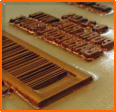 Flexography is the leading package print technology in the world today. Flexo is also the fastest growing segment of the printing industry. The Flexo industry is being driven by the demand for better, eye-catching graphics on labels, envelopes and packaging…Flexography “is a method of direct rotary printing that uses resilient relief image plates of rubber or photopolymer." Since only the ink touches the raised areas of the type, which print the message, they are called the image areas. The areas that are lower than the image areas do not receive any ink, and do not print. The raised area prints directly onto the substrate. (Paper)
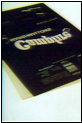
Negative
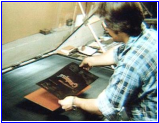
Exposing to UV Light
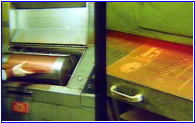
Washout – Drying – Hardening
Finished Plate
Unlike the rubber plate, which must have an engraving made from a negative, the sheet photopolymer plate, shown above, is made directly from the negative by placing the negative over a pre-cast sheet of light-sensitive photopolymer and exposing it to ultraviolet light. Next the exposed plate is put into a process processor, which removes the unhardened polymer from the non-image areas, leaving the relief image areas. The plate then goes into a drying unit for further hardening and drying.
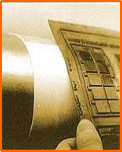
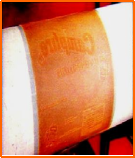
The plate is then mounted onto the plate cylinder with a double-faced adhesive cushion backing. When using a central impression printing unit (CI), the plate is mounted onto a sleeve first using a video camera, because of the tight registration that is needed, for four-colour process printing. (See Four Colour Process Printing)
Two Roller Doctor Blade Print Station
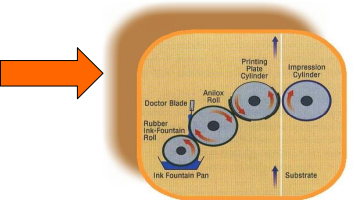
For more and more Envelope applications, flexography offers the best balance of quality, flexibility, and cost. In response to our customers’ needs for: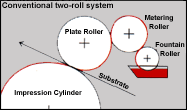
- More Graphics
- More Colour
- Higher Quality
Four (4) Colour Flexographic Printing
Central Impression (C.I.) Flexo print capabilities are designed to make your future mailings successful, by developing powerful graphics more cost effectively than ever before.
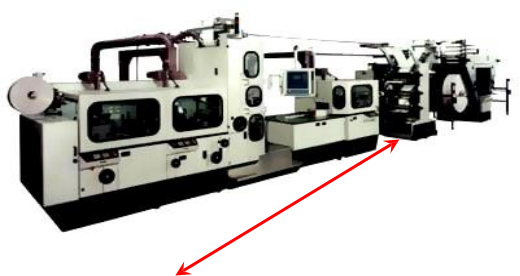
WD 627 – CI – (CENTRAL IMPRESSION UNIT) FOLDING MACHINE
Colours
P.M.S. Stands for Pantone Matching Systems. It is an international publishing and packaging colour language for inks. Ink books from Pantone, are made up of numerous colour swatches representing colours of inks that can be mixed.
They typically look like this:
 PMS 293 and then a “C" or “U" after the number, signifying either the colour is on coated or uncoated paper. This is important because colours look quite different on different papers.
Four Colour Process
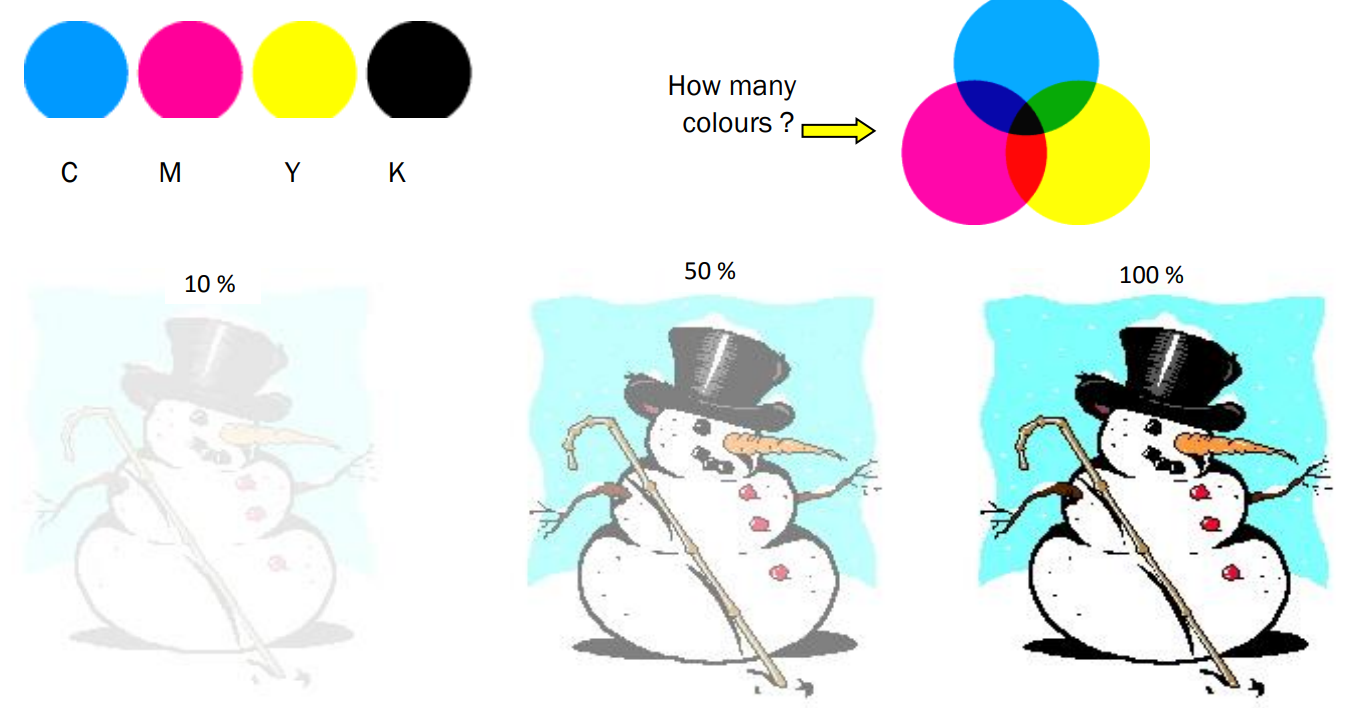
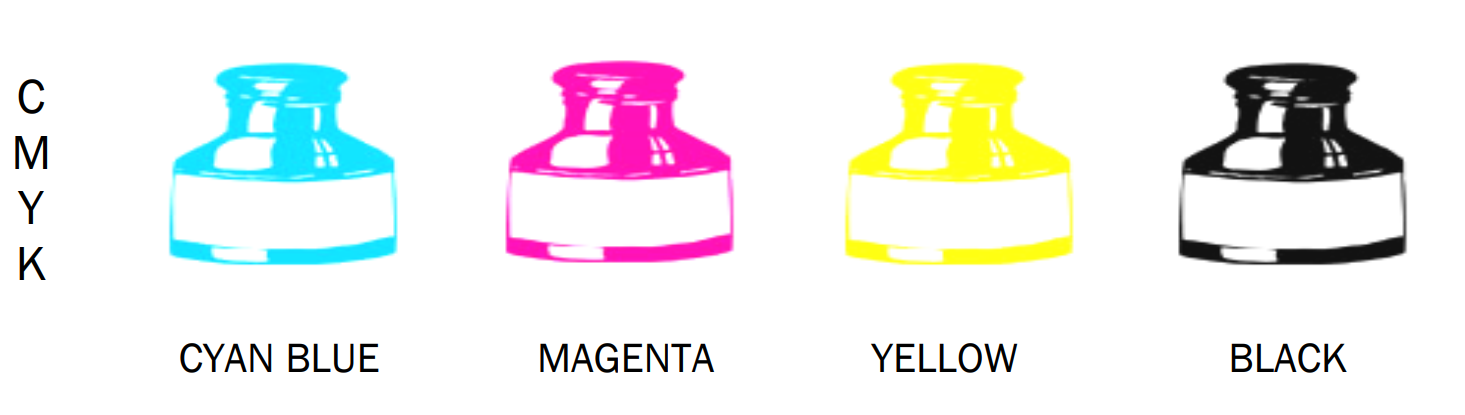
In process printing, the ink colours that are used are, Cyan (Blue), Magenta (Red) Yellow and Black, because the inks used are translucent, they can be overprinted and combined in a variety proportions to produce a wide range of colours. Theoretically, it is possible to produce an adequate range of colours using just Cyan, Magenta and Yellow. However, in practice much better results are achieved with the addition of black. The black plate is used to strengthen the shadow areas and reduce the amount of CMY inks required.
These 4 colours (CMYK) are used to print millions of colours, by overlapping each colour using a “dot screen“. This means all type, lines and photos in your brochure, flyer, envelopes, letterheads etc, are separated into these 4 colours, and have a fine screen of dots applied to them. These “dots screens" are then overlapped and applied at different percentages and angles. Generally, these dots are so fine you need a magnifying glass (printers loop) to see them.
Spot colours
Spot colours are colours that are not created as CMYK combinations but are selected from special colour libraries, such as Pantone, (PMS) When printed from a file as colour, each defined spot colour will generate a separate colour plate.
The benefits of using 4-colour process printing are being able to do multiple colored backgrounds, logos, pictures etc.. The drawback is you will have this “dot screen" through all your printing. Even though it is fine, it can “soften the image." One other drawback is, CMYK still cannot match Pantone colours exactly.